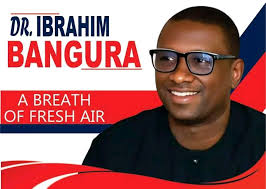
In a period marked by political debate, economic challenges, and rising public expectations, Dr. Ibrahim Bangura has emerged as a voice advocating for a transformative vision for Sierra Leone—one grounded in institutional reform, inclusive governance, and long-term national development.
Dr. Bangura’s vision centers on building a system that works effectively for its citizens. He emphasizes that sustainable progress cannot be achieved without strong institutions that are independent, accountable, and transparent. According to him, Sierra Leone’s development challenges are not only about resources but also about how systems are managed. Strengthening public institutions, fighting corruption, and ensuring that laws are applied fairly remain at the core of his national outlook.
A key pillar of his vision is economic diversification. Dr. Bangura argues that Sierra Leone must move beyond heavy dependence on extractive industries such as mining and instead invest in agriculture, tourism, and technology. He believes that agriculture, in particular, holds significant potential to create jobs, improve food security, and reduce poverty if properly modernized and supported. Mechanization, access to markets, and investment in rural infrastructure are areas he identifies as critical.
On governance, Dr. Bangura advocates for inclusivity and national cohesion. He stresses that Sierra Leone’s strength lies in its diversity and that political leadership must reflect and respect this reality. He calls for a political culture that prioritizes dialogue over division and collaboration over confrontation. In his view, democracy must go beyond elections and extend to citizen participation, accountability, and respect for the rule of law.
Youth empowerment is another major focus of his vision. With a large percentage of the population under the age of 35, Dr. Bangura sees young people not as a challenge, but as an opportunity. He calls for targeted investments in education, skills training, and entrepreneurship to prepare young Sierra Leoneans for the demands of a modern economy. He also highlights the importance of digital innovation, urging the country to embrace technology as a tool for development and global competitiveness.
In the area of education, Dr. Bangura supports reforms that improve both access and quality. He argues that education must be aligned with national development needs, ensuring that graduates possess practical skills that can drive economic growth. Technical and vocational education, he notes, should be given equal priority alongside traditional academic pathways.
Healthcare also features prominently in his vision. He underscores the need for a resilient health system that can respond effectively to both everyday health challenges and emergencies. Drawing lessons from past health crises, he advocates for increased investment in healthcare infrastructure, personnel, and service delivery.
Dr. Bangura is also vocal on the need for Sierra Leone to strengthen its international partnerships. He believes that while the country must rely on its own strengths, strategic collaborations with global partners can accelerate development. However, he cautions that such partnerships must be guided by national interest and mutual respect.
Importantly, his vision reflects a strong emphasis on accountability and leadership by example. He maintains that public trust can only be rebuilt when leaders demonstrate integrity, competence, and a genuine commitment to the welfare of the people.
As Sierra Leone looks toward the future, Dr. Ibrahim Bangura’s ideas contribute to the broader national conversation about the country’s direction. Whether through policy engagement, public discourse, or leadership, his vision presents a roadmap that seeks to address both immediate concerns and long-term aspirations.
While challenges remain, the message from Dr. Bangura is clear: Sierra Leone has the potential to achieve meaningful progress if it embraces reform, unity, and forward-thinking leadership.