By Sahr Ibrahim Komba
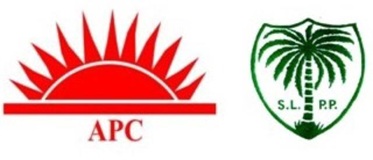
Sierra Leone’s political space is once again heating up, and at the centre of the storm is the Sierra Leone People’s Party (SLPP). From identity politics and eligibility debates to questions over who truly holds power, who commands authority, and who should succeed the party’s leader, the internal battles are becoming increasingly public and disruptive.
This moment demands reflection not only within the SLPP, but across the entire political spectrum.History has a way of repeating itself when its lessons are ignored.
The SLPP must take note: Sierra Leone has walked this path before. During the All People’s Congress (APC) era under former President Ernest Bai Koroma, succession politics was equally intense. Names and labels dominated public discourse: “the Apprentice,” “the smart lawyer,” “the favourite,” among others, each presumed to be the natural heir. Yet, none ultimately succeeded Koroma as party leader or presidential candidate.
Political analysts offered varying interpretations. Some described the episode as a struggle driven by ego and power thirst. Others argued that the former leader was reluctant to hand over power to a successor perceived as too independent or intellectually formidable. Regardless of interpretation, the episode revealed a deeper truth: access to state power often creates an illusion of invincibility.
As Lord Acton famously warned, “Power tends to corrupt, and absolute power corrupts absolutely.”
The SLPP must ask itself whether it is drifting into the same historical trap mistaking temporary control of state resources for permanent political authority.
The SLPP did not elect itself into office. It was elected by citizens empowered by the Constitution of Sierra Leone. And just as the people conferred that mandate, they retain the sovereign right to withdraw it.
Political parties and leaders must internalize this reality: no party is guaranteed permanence in power. Leadership disputes that prioritize personal ambition over collective victory weaken parties and erode public trust.
As Ghana’s first President, Kwame Nkrumah, once observed, “Political power cannot be consolidated without the consent of the governed.”
If the SLPP hopes to secure victory in 2028, it must build a coordinated, disciplined, and united front. The objective should not be who wins the internal leadership contest, but whether the party can convincingly win the confidence of the electorate again.A divided party has never won a competitive democratic election.
The APC, on the other hand, must guard against complacency. A growing narrative within sections of the party suggests that power naturally rotates every ten years “ten-ten year politics.” This belief is not only dangerous; it is constitutionally unfounded.
There is no law in Sierra Leone that guarantees any political party a decade in power. Elections are won through strategy, unity, credibility, and numbers not entitlement.
If the APC seeks a return to power in 2028, it must focus on mobilization, reconciliation, and expansion. Aggrieved members and splinter groups like the Tripartite faction, the Sam Sumana faction, and others must be engaged meaningfully. History across Africa shows that prolonged opposition weakens even the most dominant parties.
In Kenya, Zambia, and Senegal, once-dominant parties that failed to renew themselves gradually lost relevance as supporters drifted elsewhere.
The APC, as the main opposition party is effectively a shadow government. That role demands policy clarity, discipline, and national appeal not internal fragmentation.
Beyond political parties, the electorate itself must rise to a higher level of civic responsibility. Sierra Leoneans must resist the temptation to vote based on tribe, region, religion, or personal relationships.
The cost of bad leadership has been painfully clear economic hardship, corruption, weak institutions, and lost opportunities.
As Nelson Mandela once stated, “A critical, independent and investigative press is the lifeblood of any democracy.” Equally, a critical and informed electorate is the backbone of good governance.
Leadership in 2028 must be judged on competence, integrity, vision, and capacity not sentiment or symbolism.
While many have questioned the political reasoning of Sierra Leoneans in the past, the nation now stands at a crossroads. The choice is stark: repeat cycles of disappointment or consciously chart a new path grounded in accountability and national interest.
Both politicians and citizens must recommit to peace. Sierra Leone’s fragile democracy was built on the painful lessons of conflict, and the Truth and Reconciliation Commission (TRC) recommendations remain a moral and political guidepost.
Politics must never again be allowed to tear the social fabric of the nation.As the country marches toward 2028, the call is clear:
less ego, fewer factions, more vision; less entitlement, more service; less division, more nation-building.
The nation deserves leadership that learns from history, not leadership that repeats its mistakes.