By Sahr Ibrahim Komba
The eleven-year civil war in Sierra Leone remains a stark and painful reminder of the horrors we endured as a nation from 1991 to 2002. No district, town, chiefdom, or village was spared. Lives were lost, properties were destroyed, families were torn apart, and human dignity was reduced to ashes. The war did not discriminate; it consumed the innocent and the powerless alike.
Many believed the conflict was fought primarily over political power and control of the country’s natural resources. However, the Truth and Reconciliation Commission (TRC) established that the root causes ran far deeper. In Volume Two of its Report, the Commission identified corruption, bad governance, tribalism, regionalism, nepotism, and the collapse of state institutions as the principal drivers of the war. Ordinary citizens, with no connection to power or politics, became the greatest victims of a senseless conflict.
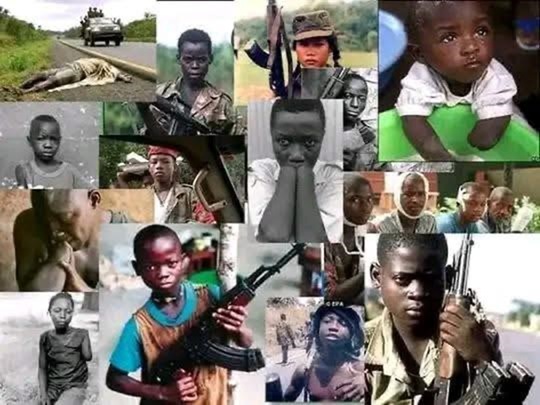
The atrocities committed during the war defy imagination. Pregnant women were brutally beaten and slaughtered as rebels attempted to determine the sex of unborn children. Entire families were locked inside houses and burned alive, including the horrific incident in Tombodu Town in Kono District, and similar acts across the country. Children were forcibly recruited into rebel forces, robbed of their innocence, and turned into instruments of violence. Women and girls were raped, sexually enslaved, and murdered. Thousands of men, women, and children were amputated, condemned to live with lifelong physical and psychological scars.
My grandmother, Bondu Kangbor, was over 80 years old at the time, fled on foot from Sierra Leone to Guinea for safety. Many elderly people, especially the disabled and the blind could not survive such a journey. One of my uncles, Kabba, unaware of the scale of the violence and unwilling to abandon his farm, was murdered. One of my blind grandparents, Grandma Baneh, who was deeply fond of me because I sometimes took her around our village each morning to greet family members, died of hunger because she could not flee with the rest of the family.
Simeon Gbayama is another living reminder of the war’s unfinished business. Shot in 1997, he still carries a bullet lodged in his ribs. For nearly three decades, he has moved from hospital to hospital seeking medical help, only to be told that the bullet is in a dangerous position and can only be removed abroad. He has appealed to countless stakeholders for assistance, but to no avail. The pain, he says, is unbearable. “My only hope is God,” he laments. “The government did not listen to my cry.”
Thousands of Sierra Leoneans carry the same pain as Simeon Gbayama silent, neglected, and forgotten.
As a result of this brutal war, countless Sierra Leoneans died and were buried in foreign lands. Many children lost their limbs, their parents, and their childhoods. Their memories are filled not with laughter, but with terror.
Recognizing this immense suffering, the TRC devoted an entire section of its recommendations (Volume Two, Chapter Two) to Reparations and Rehabilitation for Victims. The Commission made it clear that true reconciliation is impossible without justice and care for those who suffered the most. It called for:
- Medical care and psychosocial support for amputees and the war wounded
- Assistance for survivors of sexual violence
- Education and skills training for war-affected children
- Economic support to restore dignity and livelihoods
The TRC also recommended the establishment of a War Victims Trust Fund, stressing that reparations were not charity, but a moral and national obligation, a debt owed by the state to its people.
Yet, years after the war, these commitments remain largely unfulfilled. Support provided to victims has been sporadic, limited in scope, and heavily dependent on donor goodwill rather than firm and sustained government policy. Medical and psychological care has been inconsistent, leaving many amputees and trauma survivors to fend for themselves. Survivors of sexual violence have received little beyond symbolic recognition, while many continue to live with untreated physical and emotional scars. Educational and skills-training opportunities for war-affected children have reached only a fraction of those in need, and meaningful economic empowerment has failed to materialize.
The War Victims Trust Fund itself has suffered from inadequate funding and weak political commitment, falling far short of the comprehensive reparations framework envisioned by the TRC. As a result, thousands of victims remain trapped in poverty, marginalization, and silence.
The failure to fully implement the TRC’s recommendations represents not just a policy gap, but a profound moral failing that continues to deny war victims justice, dignity, and the lasting peace they were promised.
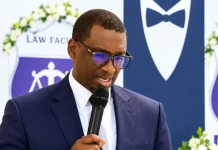
Today, voices like Abass Sesay, a well-known war victim who lost his arm at age three during the conflict recently graduated with a law degree from Fourah Bay College, remind us that the struggle is far from over. Using his platform, Abass continues to advocate for reparations and justice for fellow victims. Like many others, he has completed higher education yet remains unemployed, a painful indication that the nation still turns a blind eye to those who physically and emotionally carry the scars of the war.
Other advocates, including Catco Sesay, Mariama Mary Kamara, Sidimba Elizabeth Kargbo, and Mohamed Tarawallie, President of the Amputees and War Wounded Association, have consistently urged the government and development partners to implement the TRC recommendations. They have appeared across media platforms seeking justice and support, yet their cries remain largely unanswered.
The TRC also issued a powerful warning to all Sierra Leoneans. In Volume Two, Chapter One on Reconciliation, it urged citizens never again to allow ethnicity, region, or political manipulation to divide us, reminding us that division was the fuel that ignited our destruction. The Commission emphasized that national unity, accountability, and respect for human dignity are the only safeguards against a return to violence.
As we mark Remembrance Day, we must do more than recall the past; we must honour the victims through action. We owe them care. We owe them justice. We owe them inclusion. We owe them a nation that remembers their pain and refuses to repeat its mistakes.
Peace without reparations is fragile.
Unity without justice is hollow.
And remembrance without responsibility is meaningless.
May we remember.
May we heal.
And may Sierra Leone never again walk the path of war.