By Sahr Ibrahim Komba
Each year, the Audit Service Sierra Leone (ASSL) Annual Audit Report delivers sobering findings: corruption remains pervasive across ministries, departments and agencies (MDAs), driven by persistent weaknesses in financial controls, procurement systems, and regulatory compliance. Despite sustained interventions by the Anti-Corruption Commission (ACC) including public education, system reviews, policy reforms, and institutional partnerships public trust remains fragile, and corruption levels continue to alarm citizens.
While the ACC has pursued systematic reforms aimed at strengthening governance, critics argue that systems without enforcement are merely decorative. The persistence of both petty and grand corruption suggests that fundamental gaps in accountability and deterrence remain unresolved.
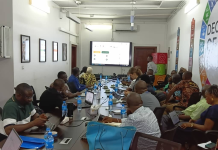
The ACC routinely conducts system reviews and comprehensive examinations of institutional processes designed to identify structural vulnerabilities that enable corruption. These reviews are intended to strengthen internal controls, improve transparency, and inform policy and legislative reforms.
In recent years, the Commission has deepened collaboration with key accountability institutions, including the Audit Service Sierra Leone, the National Public Procurement Authority (NPPA), and the Right to Access Information Commission (RAIC), aligning anti-corruption efforts with broader governance and oversight frameworks.
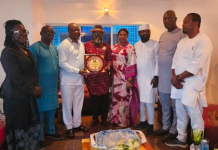
In presenting its 2024 Annual Report to the President, the ACC highlighted progress in investigations, prosecutions, institutional partnerships, and internal capacity building. The Commission reaffirmed its commitment to transparency, accountability, and multi-stakeholder collaboration in the fight against corruption.
The Millennium Challenge Corporation (MCC) “Control of Corruption” indicator placed Sierra Leone among the higher-performing countries in its cohort in 2024, recording a strong 74 percent score and marking seven consecutive annual passes, a notable turnaround from failing the indicator in 2017.
Similarly, the Mo Ibrahim Index of African Governance ranked Sierra Leone among the top ten most improved countries, citing gains in anti-corruption mechanisms and state institutional integrity.
However, Transparency International’s 2024 Corruption Perceptions Index (CPI) tells a more troubling story. Sierra Leone slipped two places to 114th out of 180 countries, scoring 33 out of 100, reinforcing public perceptions that corruption remains deeply entrenched within the public sector.
These contrasting assessments highlight the complexity of measuring progress. Statistical improvements and institutional reforms do not always translate into tangible change in citizens’ daily experiences, nor into visible reductions in corrupt practices.
The Audit Service Sierra Leone’s 2024 Annual Audit Report documents continued accountability efforts, including formalised partnerships with oversight institutions and community engagement initiatives aimed at strengthening audit follow-up.
Yet, independent reviews consistently show that implementation of audit recommendations by MDAs remains weak. Institutions frequently fail to act on audit findings, allowing irregularities identified in one audit cycle to reappear in subsequent reports. This chronic non-compliance significantly undermines the deterrent value of audits and weakens public financial management.
Compounding these challenges, recent controversy surrounding a tribunal into the performance of the Auditor-General and her deputy has raised serious concerns about the independence and credibility of oversight institutions. Civil society organisations have challenged the tribunal’s findings and procedures, warning that political interference in accountability institutions poses broader risks to governance and democratic checks and balances.
Sierra Leone’s legal framework recognises the importance of whistleblowers and access to information in combating corruption. The Anti-Corruption Act of 2008 provides protections for informers and witnesses, including immunity from civil or criminal liability and financial rewards linked to successful prosecutions. Complementing this, the Right to Access Information Act of 2013 seeks to empower citizens through transparency.
In practice, however, the absence of a dedicated whistleblower protection law, combined with fears of retaliation, remains a major constraint. Recent high-profile political episodes such as a Member of Parliament publicly alleging corruption on an international media platform, only to face intense pressure and subsequently retract his statements illustrate how institutional safeguards can fall short. Such incidents discourage reporting and reinforce public perceptions of impunity.
Strong laws and oversight mechanisms are ineffective without consistent enforcement. Audit recommendations are often ignored, prosecutions are slow, and sanctions are unevenly applied, allowing corrupt practices to persist.
The threat of professional, political, or personal reprisals deters whistleblowers. Although protections exist on paper, practical safeguards are limited, and confidence in reporting mechanisms remains low.
The ACC’s system review initiatives and collaborative reforms represent important steps in Sierra Leone’s long-standing fight against corruption. International rankings and institutional partnerships suggest progress on paper. Yet, the continued prevalence of corruption, poor implementation of audit recommendations, and widespread fear among whistleblowers point to deeper structural and cultural challenges.
For system reviews to truly achieve their objectives, they must be matched by credible enforcement, active protection of whistleblowers, swift and impartial prosecution of offenders, and robust civic-led oversight. Without these, even the best-designed systems risk remaining well-intentioned but ineffective frameworks in the ongoing struggle for accountable governance.
Audit reports released in 2024 across multiple jurisdictions also reveal deep and systemic failures in the management and oversight of school bus transportation systems. Despite differences in geography and administrative structures, the findings expose common weaknesses that place student safety, service reliability, and public accountability at risk.
At the core of these findings are serious compliance failures. Many drivers were found operating without complete safety documentation, including valid commercial driver’s licences, criminal background checks, and proof of mandatory training. In some cases, individuals with criminal records were employed without proper vetting, while pre-trip safety inspections were poorly documented or not conducted at all.
Audits also uncovered significant vehicle maintenance and inspection gaps. Numerous buses were operating without up-to-date inspections, and maintenance records were incomplete or missing raising serious concerns about mechanical reliability and the safety of children transported daily.
Oversight and accountability failures were particularly evident in systems relying on private operators. Auditors identified weak monitoring of contractor performance, poor complaint management, and inconsistent enforcement of contractual penalties even where breaches were clearly established. In some instances, millions in penalties went uncollected, eroding incentives for compliance.
Although technologies such as GPS tracking existed in several systems, auditors found them underutilised or supported by outdated platforms, limiting their effectiveness in monitoring routes, driver behaviour, and service reliability.
Collectively, these shortcomings heighten the risk of accidents, service disruptions, and chronic operational failures, while further eroding public confidence in institutions responsible for student transportation.
Auditors consistently called for urgent reforms, including stronger governance frameworks, automated compliance systems, stricter contract enforcement, better use of data and technology, and more rigorous driver training and vehicle inspection regimes.
The 2024 audit findings send a clear warning: without decisive action, school bus systems will continue to expose children to unnecessary risk. Protecting students and restoring public trust will require sustained investment, firm accountability, and an uncompromising commitment to safety and transparency.