By Sahr Ibrahim Komba
In the 21st century, Sierra Leone still struggles to provide reliable healthcare services to citizens living within a five-kilometer radius of health facilities.
In many rural communities, accessing medical care remains a test of endurance one that too often ends in tragedy.
On September 22nd,2025, 28-year-old Finda Ngaujah went into labor in Kangbor Village, Sandor Chiefdom, Kono District.
Pregnant with twins, her husband and relatives made several desperate calls for an ambulance but none came.
As labor intensified, Traditional Birth Attendants helped her deliver one baby, but she was in critical condition.
With no vehicle available, volunteers placed Finda in a hammock and carried her seven miles to the Yardu community-run health center, itself under-resourced and poorly equipped to handle emergencies.
The nurse on duty advised that she be transferred to the Koidu Government Hospital. The volunteers continued their journey, walking seven miles. An ambulance eventually met them en route, but by then Finda had lost consciousness due to severe bleeding.
Doctors performed an emergency Cesarean section on September 24th to save her life, but the second baby did not survive.
Finda’s story echoes that of many women in Sierra Leone’s remote and underserved communities, where access to healthcare remains a daily struggle. Peripheral Health Units (PHUs) and community health centers meant to bring healthcare closer to the people are often under-equipped, understaffed, and reliant on volunteer workers.
Many lack essential drugs and even basic first-aid kits. Reports continue to surface of drugs meant for PHUs being diverted to private hospitals, leaving rural patients without lifesaving supplies.
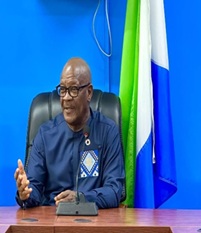
Despite these challenges, government officials maintain that significant progress is being made. According to Health Minister Dr. Austin Demby, Sierra Leone currently has about 1,600 health facilities, and 85% of the population can now access care within a five-kilometer radius. However, his statement stands in sharp contrast to realities on the ground, where countless families still walk miles for basic medical assistance.
Dr. Demby further revealed that the national health expenditure per person is $46.
“If one person is involved in a motorbike accident, the treatment could consume funds meant for ten to fifteen people,” he cautioned, noting the strain on the country’s limited health budget.
“The government cannot do more because the economy is stagnated,” he added, while emphasizing the role of development partners in supporting primary healthcare.
Yet, the numbers tell a sobering story. In the 2024 financial year, the government allocated 7% of its national budget to health far below the 15% Abuja Declaration target agreed by African leaders.
In 2025, the figure rose to 9%, but the country still falls short of its commitment.
In the midst of all of these dramas, there are increasing issues of drug theft in government run hospitals.
In April 2025, the Anti Corruption Commission through the help of authorities discovered thirteen cartoons of assorted drugs meant for Free Health Care program hidden in male toilet at the Koidu Government Hospital.
Similar incident occurred in June 2025 where a 28 year-old pharmacy technician was arrested in Kambia government hospital for alleged theft of government supplies Free Health Care Medications from the hospital central medical store. These are staggering evidence that has caused public mistrust in the country.
The World Health Organization (WHO) defines Universal Health Coverage (UHC) as ensuring that everyone can access quality health services including prevention, treatment, rehabilitation, and palliative care without suffering financial hardship. UHC, part of the Sustainable Development Goals (SDG 3.8)rests on three pillars: equity in access, quality of services, and financial-risk protection.
Sierra Leone’s Ministry of Health and Sanitation envisions achieving “Universal Health Coverage by 2030.”
A step toward this goal came in May 2025, when a high-level dialogue discussed the Sierra Leone Agency for Universal Health Coverage (SLAUHC) Bill a proposal to unify fragmented health financing systems, including the Free Healthcare Initiative (FHCI) and the Sierra Leone Social Health Insurance Scheme (SLeSHI).
The government has also reaffirmed its commitment through international partnerships and a $20 million pandemic fund to strengthen health systems.
However, challenges persist. Out-of-pocket payments account for about 56% of total health expenditure among the highest in Africa while less than 1% of the population is covered by social health protection. Donor funding makes up roughly 75% of total health financing, raising questions about sustainability.
Across Africa, few nations have come close to realizing full UHC. Countries such as Seychelles, Algeria, Cape Verde, and South Africa have achieved higher service coverage indices around 70–75 but even these figures represent only partial fulfillment of the UHC goal.
From a policy standpoint, Sierra Leone has demonstrated strong political will but faces deep structural and financial gaps.
Achieving UHC will require more than declarations it demands legal reform, sustainable financing, institutional strengthening, and community participation, especially involving traditional and local leadership.
As Finda Ngaujah’s ordeal shows, the human cost of weak health systems is profound. Until every woman, child, and elderly person can access timely and quality care without walking miles or risking their lives Sierra Leone’s journey toward Universal Health Coverage remains a promise unfulfilled.
#ALongWalkToCare
#TheStrugglesOfSierraLeomeansUnderservedCommunitiesOnTheRoadToUniversalHealthcoverage
The Ministry of Information and Civic EducationWorld Health Organization (WHO)Pharmacy Board of Sierra LeoneMinistry of Health and Sanitation, Sierra LeoneImpact Media SL