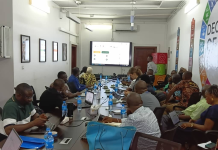

The re-emergence of Ebola in Central Africa should not be viewed solely as a public health concern. For countries with fragile economies, including Sierra Leone, it is a stark warning of the devastating economic consequences that can follow a disease outbreak if preventive measures are not swiftly and effectively implemented.
The recent declaration by the World Health Organization (WHO) of the latest Ebola outbreak as a Public Health Emergency of International Concern has once again highlighted the inseparable link between public health and economic stability.
Although the current outbreak is concentrated in the Democratic Republic of Congo and Uganda, experience has demonstrated that the economic repercussions of Ebola often extend far beyond the countries directly affected.
For Sierra Leone, memories of the 2014–2016 Ebola epidemic remain vivid. The outbreak claimed thousands of lives, disrupted education, overwhelmed healthcare services, and significantly weakened economic growth.
More than a decade later, the country continues to rebuild and strengthen both its health system and economic resilience.
Today, Sierra Leone remains vulnerable to external shocks. Inflationary pressures, persistent youth unemployment, widespread poverty, and heavy dependence on imports and commodity exports continue to expose the economy to significant risks.
Against this backdrop, the re- emergence of Ebola anywhere within the region carries serious implications.
One of the first casualties of any major disease outbreak is economic confidence. Investors, businesses, tourists, and trading partners often respond cautiously to reports of infectious diseases. Even countries that are not directly affected can experience declining investor confidence and reduced commercial activity due to fears of regional instability.
Sierra Leone’s experience during the 2014–2016 Ebola crisis provides a sobering example.
Before the outbreak, the country’s economy was among the fastest growing in Africa, recording an estimated GDP growth rate of 16.7 percent in 2012. However, as Ebola spread, growth slowed dramatically to approximately 4 percent in 2014 before the economy plunged into a deep recession in 2015.
The outbreak disrupted economic activities nationwide. Quarantines, movement restrictions, and public fear forced many businesses to close temporarily or scale down operations. Thousands of workers lost their jobs, while businesses that remained operational reported average revenue losses of nearly 40 percent.
Food prices surged as border closures and supply chain disruptions created shortages of essential commodities, including imported rice and fish. At the same time, government revenues declined sharply due to reduced tax collections and disruptions in regional trade with neighbouring Guinea and Liberia. Revenue losses exceeded US$150 million.
The epidemic also dealt a severe blow to the country’s workforce, particularly among young adults aged 25 to 29, one of Sierra Leone’s most economically productive demographic groups. The loss of lives and livelihoods pushed thousands of households deeper into poverty and increased economic vulnerability across communities.
Although the country eventually recovered and key economic indicators improved, the long-term effects on household incomes, businesses, and national development continue to serve as a reminder of the far-reaching consequences of public health emergencies.
Trade is often among the first sectors affected during disease outbreaks. Enhanced border controls, travel advisories, and restrictions on movement can delay the flow of goods and services. For economies that depend heavily on regional commerce, such disruptions can reduce business activity and government revenue.
The informal sector, which provides livelihoods for a large proportion of Sierra Leoneans, is particularly vulnerable. Market traders, transport operators, petty business owners, and daily wage earners depend on regular human interaction and mobility. Any decline in market activity or restrictions on movement can immediately reduce household incomes.
Agriculture is equally exposed. Farmers may struggle to access markets, secure labour, or obtain agricultural inputs. Reduced agricultural production and distribution can affect rural livelihoods while contributing to food shortages and rising prices.
Healthcare systems also come under immense strain. Resources that would otherwise be allocated to development priorities may need to be redirected toward emergency response measures, including surveillance, testing, contact tracing, treatment, and public awareness campaigns. Such diversions can delay investments in infrastructure, education, and other critical social services.
Perhaps most significantly, Ebola generates fear. During previous outbreaks, fear itself became one of the most damaging economic forces. Businesses closed, transport services declined, consumer spending weakened, and economic activity slowed not only because of the virus itself, but also because people altered their behaviour to avoid infection.
The lessons from previous Ebola outbreaks are clear: prevention and preparedness are far less costly than responding to a full-scale epidemic.
First, government authorities must strengthen surveillance at border crossings, airports, seaports, and major transport hubs. Early detection remains one of the most effective tools for preventing widespread transmission.
Second, public awareness campaigns must be intensified. Accurate and timely information can reduce panic, combat misinformation, and encourage communities to adopt preventive measures without unnecessarily disrupting economic activity.
Third, investments in healthcare infrastructure should remain a national priority. Strengthening laboratory capacity, training healthcare personnel, maintaining adequate stocks of protective equipment, and improving emergency response systems are essential for rapid containment.
Fourth, governments must work closely with regional institutions and international partners to ensure coordinated responses. Infectious diseases do not respect national borders, making regional cooperation indispensable.
Fifth, economic contingency plans should be developed to protect vulnerable households and small businesses. Social safety nets, support for traders and farmers, and measures to safeguard food supply chains can help cushion the economic impact of an outbreak.
Finally, the private sector must be fully integrated into preparedness efforts. Businesses should be encouraged to implement workplace health protocols and continuity plans that enable operations to continue safely during health emergencies.
The emergence of Ebola is far more than a health challenge; it is an economic security issue.
For countries with fragile economies, a major outbreak can reverse years of development gains, discourage investment, increase unemployment, deepen poverty, and place enormous pressure on public finances.
Sierra Leone’s experience during the 2014–2016 Ebola epidemic demonstrated the heavy price nations pay when public health crises intersect with economic vulnerability. The current outbreak in Central Africa should therefore serve as a powerful reminder that preparedness, vigilance, and investment in resilient healthcare systems are not merely health priorities; they are essential pillars of sustainable economic development.
As governments across the region monitor developments, the focus must remain firmly on prevention, preparedness, and the protection of both lives and livelihoods.
The cost of readiness may be high, but the cost of complacency could be far greater.