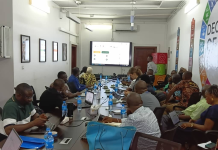

A growing institutional tension has emerged between the Anti-Corruption Commission (ACC) and the University of Sierra Leone (USL) following conflicting outcomes from separate investigations into alleged corruption and administrative misconduct at the country’s premier university.
The controversy stems from a detailed report by a USL Sub-Committee established by the University Court in January 2025 to examine findings from an earlier Investigation Committee. That report painted a troubling picture of systemic weaknesses, highlighting procurement irregularities, financial mismanagement, and administrative lapses between 2021 and 2023.
However, in a twist that has rocked the academic and governance landscape, the ACC, after conducting its own review, reportedly exonerated several senior university officials who had earlier been implicated and even sent on leave pending investigations. The ACC concluded that those officials were innocent of the allegations brought against them.
The USL Sub-Committee report did not directly indict individuals in all cases but documented widespread institutional failures. Among the key issues raised were the absence of a legally mandated Procurement Committee, lack of a procurement policy, poor record-keeping practices, and unauthorized procurement activities including the purchase of a vehicle valued at US$126,000 outside due process.
Additionally, the report flagged concerns over a multi-billion Leone procurement of student identity cards using inappropriate procedures, lack of staff training, and weak internal oversight mechanisms. It also highlighted broader governance issues such as delays in financial reporting, poor asset management, and non-compliance with statutory regulations.
In contrast, the ACC’s findings appear to have focused on individual culpability rather than systemic weaknesses. By clearing the officials of corruption charges, the Commission effectively separated institutional inefficiencies from criminal wrongdoing.
This divergence in findings raises critical questions about accountability within public institutions. While the ACC’s exoneration may restore the reputations of the affected officials, it does not invalidate the structural concerns identified by the university’s own review process.
Observers note that the USL report emphasizes policy breaches and administrative lapses that may not necessarily meet the legal threshold for corruption but still undermine effective governance. These include failure to establish oversight bodies, non-adherence to procurement laws, and inadequate financial controls.
The situation underscores a broader challenge in public sector management: distinguishing between criminal liability and institutional responsibility. Experts argue that even in the absence of prosecutable offences, the documented irregularities demand urgent reforms.
The Sub-Committee made several recommendations aimed at strengthening transparency and efficiency within the university. These include establishing a functional Procurement Committee in line with the Public Procurement Act 2016, introducing a comprehensive procurement policy, digitizing records, and conducting regular audits.
It also called for legal action in specific cases of unauthorized procurement and urged the university to improve staff training and oversight mechanisms.
Beyond procurement, the report identified wider institutional gaps, including the non-existence of key governance structures such as a University Planning Office and Research and Development Bureau, as well as delays in academic and financial processes.
The conflicting reports place both the ACC and USL under public scrutiny. For the ACC, the challenge lies in maintaining public confidence in its investigative processes, particularly when its conclusions differ from internal institutional findings. For USL, the focus shifts to implementing reforms that address the systemic issues highlighted in its own report.
Stakeholders say the situation should not be viewed as a contradiction but rather as complementary insights into different dimensions of accountability—legal versus administrative.
As Sierra Leone continues to strengthen its governance institutions, the USL case may serve as a critical lesson in the need for robust internal controls, clear policy frameworks, and effective collaboration between oversight bodies.
Ultimately, while the ACC’s decision may close the chapter on alleged corruption by individuals, the broader story of institutional reform at the University of Sierra Leone is far from over.