The Sierra Leone Electricity and Water Regulatory Commission (SLEWRC) has launched a nationwide public awareness campaign aimed at educating communities on the updated Multi-Year Tariff Order (MYTO) framework, a regulatory tool designed to improve transparency, fairness, and sustainability in electricity pricing for mini-grid systems across rural Sierra Leone.
The initiative, funded by the European Union through the Salone Off-Grid Renewable Energy (SOGREA) Project, and implemented by UNOPS together with Sustainable Energy for All (SEforALL), will run from May 18 to May 25, 2026, covering key provincial communities including Moyamba, Bo, Kono, Makeni, Port Loko, and surrounding areas.
The roadshow seeks to foster dialogue between electricity consumers, local communities, operators, and regulators on how electricity tariffs are determined under the MYTO framework, while addressing concerns around affordability, service reliability, and consumer protection.
Speaking at a press briefing to officially launch the campaign, Director General of SLEWRC, Festus Kallay, described the initiative as an important milestone in Sierra Leone’s energy sector reforms.
“Today marks an important milestone in Sierra Leone’s energy sector reform journey as the Electricity and Water Regulatory Commission officially launches the popularization and public awareness campaign for the updated Multi-Year Tariff Order (MYTO) tool,” Kallay said.
He emphasized that the updated MYTO framework is not simply a revised technical instrument but a structured and rules-based regulatory system intended to ensure electricity tariffs remain fair, transparent, and predictable.
According to him, tariff decisions are based on independent assessments of operational costs and are not influenced by politics.
“It is important to emphasize that tariffs are not determined arbitrarily or politically. Every tariff application undergoes a detailed regulatory review process where costs are assessed, justified and independently evaluated before any decision is made,” he stated.
Mr. Kallay noted that the updated framework seeks to strike a balance between protecting consumers from excessive costs while ensuring operators can sustainably provide reliable electricity services.
He said maintaining electricity supply requires continued investments in infrastructure, fuel, maintenance, technology, and skilled personnel, adding that inadequate cost recovery could undermine efforts to expand electricity access nationwide.
“The updated MYTO tool introduces stronger oversight mechanisms, clearer tariff adjustment procedures, and enhanced safeguards to protect consumers against inefficiencies,” he explained.
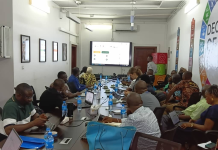
As part of the campaign, SLEWRC and partners will organize stakeholder engagements, town hall meetings, radio discussions, and public sensitization activities in district headquarters and surrounding communities.
The engagements are expected to bring together chiefs, youth groups, women’s organizations, educators, media practitioners, consumers, and mini-grid operators to discuss electricity tariffs and sector challenges.
Officials say the initiative is intended to improve public understanding while creating opportunities for communities to provide feedback on electricity service delivery.
“We want to take the conversation directly to the people, listen to community concerns, improve public understanding, and ensure consumers appreciate both the benefits and responsibilities within the electricity service delivery chain,” Kallay stated.
SLEWRC acknowledged ongoing concerns regarding electricity reliability and affordability in rural communities but maintained that the updated MYTO framework is designed to encourage investment in mini-grid infrastructure while strengthening regulatory oversight.
The Commission argued that transparent tariff-setting mechanisms would improve investor confidence and help operators expand and sustain electricity services in underserved communities.
The roadshow also seeks to dispel misconceptions surrounding electricity tariffs and mini-grid operations, particularly in rural areas where consumers often question why payments are required for electricity generated through renewable sources.
Development partners supporting the initiative stressed the importance of transparency and community engagement in building a sustainable energy sector.
The head of Economic Regulation Alfred Kaima, said the campaign reflects efforts to strengthen institutions while empowering communities with knowledge.
“This roadshow reflects SLEWRC’s commitment to supporting credible institutional strengthening and empowering communities with the knowledge they need. Together with our partners, we are helping SLEWRC lay the groundwork for a more transparent and equitable renewable energy sector in Sierra Leone,” she said.
Alfred Kaima described the MYTO awareness process as critical to increasing transparency and investor confidence in the country’s electricity sector.
“The MYTO popularization process is a key step toward improving transparency, investor confidence and public understanding of electricity mini-grid tariffs in Sierra Leone,” he noted.
The Commission concluded that the awareness campaign underscores Sierra Leone’s broader commitment to expanding reliable electricity access while ensuring affordability, accountability, and sustainability in the energy sector.
Kallay called on community members and stakeholders to actively participate in the engagements.
“I encourage all concerned to actively participate in this awareness process, ask questions, provide feedback, and engage constructively as we work together toward a more transparent, reliable and sustainable energy future,” he said.
The campaign is being carried out under the slogan: “MYTO Na For Wi All.”