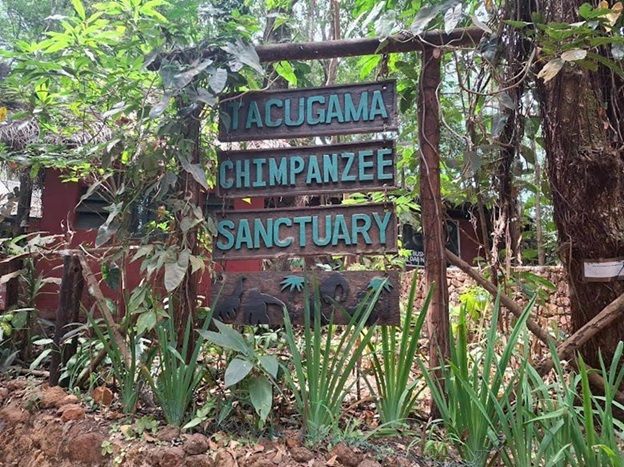
The Tacugama Chimpanzee Sanctuary in Sierra Leone is found high above the bustle of Freetown, where the humid air gives way to cool mist and the noise of urban life fades into birdsong. For more than three decades, this sanctuary has stood as a symbol of conservation, resilience, and national pride. Today, it is fighting for survival.
Founded in 1995 by conservationist Bala Amarasekaran, Tacugama began as a modest rescue effort for orphaned chimpanzees victims of poaching and habitat destruction. What started with a single rescued chimp named Bruno has grown into a globally recognized conservation institution.
Set within the lush forests of the Western Area Peninsula National Park, the sanctuary has played a pioneering role in shaping Sierra Leone’s environmental consciousness. At a time when civil war had crippled governance structures and environmental protection was virtually nonexistent, Tacugama quietly built a movement.
Its impact has been profound. The sanctuary has rehabilitated over a hundred chimpanzees, trained forest rangers, educated schoolchildren, and partnered with communities to promote sustainable practices. Its influence even contributed to the landmark decision in 2019 to declare the chimpanzee the nation’s official animal a cultural and environmental milestone.
International recognition followed, including a visit by renowned primatologist Jane Goodall, whose endorsement elevated Tacugama’s global profile.
Despite its achievements, Tacugama now faces its greatest challenge yet human encroachment.
Illegal land grabbing, deforestation, bush burning, and unregulated construction are rapidly eroding the sanctuary’s buffer zone, a critical protective barrier between wildlife and human activity. What was once dense rainforest is increasingly being replaced by concrete structures, barren hillsides, and speculative developments.
Amarasekaran has spoken candidly about the pressure. In a recent interview, he revealed receiving threats, including warnings that the sanctuary could be burned down. The intimidation reflects a deeper and more troubling reality: powerful interests are driving much of the encroachment.
“About 90% of the land grabbers are connected to power,” he said, pointing to a network of politically linked actors, intermediaries, and complicit officials who facilitate illegal land sales even within protected areas.
This is not merely a land dispute; it is a governance crisis. Existing environmental laws and national park protections are being undermined by weak enforcement, corruption, and political interference. Cases often go unprosecuted, and offenders walk free.
The consequences extend far beyond the sanctuary itself.
Just a short distance away lies the Guma Dam, the primary source of clean water for the capital’s growing population. The surrounding forest acts as a natural filtration system, safeguarding water quality and regulating runoff.
As deforestation accelerates, this delicate ecosystem is being destabilized. Soil erosion, sedimentation, and pollution threaten the dam’s long-term viability, raising the specter of a future water crisis in Freetown.
“This is not only about chimpanzees,” Amarasekaran stressed. “It is about protecting the water catchment and the future of this country.”
Environmental experts warn that Sierra Leone has already lost a significant portion of its forest cover over the past two decades. Without urgent intervention, the damage may become irreversible.
Before its recent closure to visitors, Tacugama was one of Sierra Leone’s leading ecotourism destinations. Nestled in the hills, it offered a rare blend of biodiversity, education, and tranquility attracting tourists, researchers, and conservation enthusiasts from around the world.
Visitors could watch chimpanzees swing through forest enclosures, learn about wildlife protection, and experience the unique beauty of Sierra Leone’s rainforest ecosystem. For many, it was a powerful reminder of what the country stands to lose.
Ecotourism provided not only revenue but also jobs for local communities and a platform for global engagement. Its decline sends a troubling signal.
“We cannot invite people to invest in ecotourism while failing to protect the environment,” Amarasekaran warned.
The emotional toll of the crisis is evident. In a recent media appearance, Amarasekaran appeared visibly shaken, questioning what will happen to the sanctuary after his lifetime.
“If this can happen while I am here, what will happen when I am gone?” he asked.
After more than 30 years of relentless advocacy, he admits the fight is exhausting. Yet, giving up is not an option.
“It is easy to get tired in Sierra Leone,” he said. “But this is what I have been known for. I have done this for too long.”
Still, there are glimmers of hope. Growing awareness among young people and local communities is strengthening grassroots support for conservation. Government interventions, including recent crackdowns on illegal structures, suggest that the crisis is beginning to receive attention at the highest levels.
Amarasekaran insists that meaningful change must go beyond rhetoric. It requires accountability, enforcement of existing laws, and a national commitment to protecting natural resources.
Tacugama is more than a refuge for chimpanzees. It is a test case for Sierra Leone’s environmental future, a measure of whether the country can balance development with sustainability, and whether its institutions can uphold the rule of law.
As the sun sets over the hills above Freetown, casting golden light across the forest canopy, the sanctuary remains fragile yet defiant.
Its fate will depend not only on the dedication of one man but on the collective will of a nation.
If Tacugama falls, it will not just be the loss of a sanctuary. It will be the loss of a vision one that believes Sierra Leone’s natural heritage is worth protecting, not just for today, but for generations to come.
His emotional appeal raises difficult questions for policymakers and citizens alike. Can Sierra Leone market itself as a destination for eco-tourism while allowing protected lands to be destroyed? Can authorities invite investment while failing to support those safeguarding forests, wildlife, and water sources?
Tacugama’s battle is no longer only about chimpanzees. It is about governance, sustainability, and the future of the nation’s environment.
And as Bala’s voice trembled during the interview, one message came through clearly: if Sierra Leone does not act now, it may lose far more than a forest.