By Sahr Ibrahim Komba
Special Envoy for the West Africa Integration and Investment Summit, Dr.Kandeh K. Yumkella, has called for a fundamental reset of the Economic Community of West African States (ECOWAS), urging the subregion to return to its founding mission of economic integration and shared development.
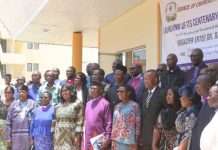
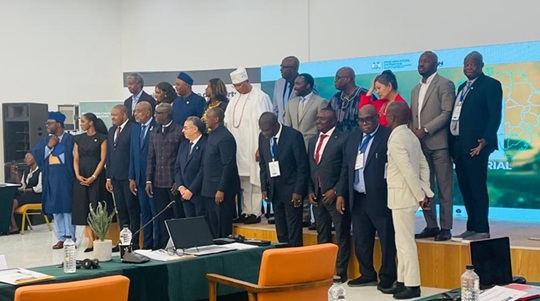
Speaking at a high-level preparatory meeting in Freetown ahead of the 2026 summit, Dr. Yumkella said that for decades ECOWAS has been preoccupied with political instability and security challenges, often at the expense of its core economic mandate.
“ECOWAS has been plagued by security and political issues for nearly 50 years,” he said. “But it was originally formed to foster economic integration and common development across member states. The vision now is to go back to basics.”
He emphasized that while security remains essential, it cannot be sustained without economic progress.
“You need security to have investment, but without development, security and democracy cannot be sustained. We need jobs, prosperity, and improved living conditions for our people,” he added.
Dr. Yumkella explained that the planned West Africa Integration and Investment Summit seeks to redefine the region’s development trajectory through four strategic pillars: energy trade, strategic minerals, agribusiness, and digital transformation.
He described energy as the backbone of industrial development, pointing to the CLSG interconnection project as a model of successful regional collaboration.
“Energy trade is one of the most successful integration efforts in West Africa,” he noted. “Sierra Leone now trades power with Côte d’Ivoire and Guinea. These interconnections allow countries to maximize their comparative advantages.”
On natural resources, he highlighted the region’s vast mineral wealth from gold in Ghana and Mali to bauxite in Guinea and emerging lithium projects in Sierra Leone but warned that fragmented policies continue to limit their full potential.
“We are acting in a fragmented way. We need harmonized policies, stable fiscal regimes, and consistent legal frameworks to attract investment and ensure value addition,” he said.
Dr. Yumkella stressed the paradox of a region rich in arable land yet heavily dependent on food imports.
“West Africa imports nearly $10 billion worth of food annually. If we are serious about integration and poverty reduction, food systems must be central to our agenda,” he said.
He also underscored the importance of digital transformation in unlocking innovation, entrepreneurship, and youth employment across the region.
“We cannot discuss integration without technology. Digital solutions will drive national and regional transformation and create opportunities for our young people,” he added.
Dr Abdul Kamara, Vice President of the African Development Bank Group reinforced the importance of regional cooperation, noting that Africa’s resilience depends on collective action in the face of global economic uncertainty.
“The future will be stronger when we build it together,” the official said, outlining the Bank’s priorities, including mobilizing Africa’s domestic capital, strengthening financial systems, investing in climate-resilient infrastructure, and turning demographic growth into economic opportunity.
The Bank currently manages a multinational operations portfolio of about $3.72 billion in West Africa, supporting major cross-border projects in energy and transport aimed at boosting trade and connectivity.
The Country Manager of the World Bank Group in Sierra Leone called for practical reforms to improve the business environment and unlock private sector investment.
“We have many conferences, but the key question is what will we do differently?” he asked. “Let us focus on specific reforms whether removing trade barriers or harmonizing tax systems and follow through.”
He pointed to successful regional initiatives such as the CLSG energy project and digital infrastructure programs as examples of how partnerships can drive development and reduce costs.
Mr Victor DJemba Chief Regional Bureau Africa United Nations Industrial Development Organization (UNIDO) warned that West Africa’s development challenges stem from weak industrialization.
“We export raw materials and import finished goods. That is not development, it is dependency,” he said, calling for stronger project preparation and investment strategies to close the region’s “bankability” and “industrialization” gaps.
The Minister of Planning and Economic Development Madam Kenyeh Barley described the meeting as a pivotal moment as ECOWAS marks its 50th anniversary under the leadership of President Julius Maada Bio.
“This meeting must move from vision to action,” the Minister said. “We are expected to produce concrete policy recommendations, investment frameworks, and measurable targets that will guide the 2026 summit.”
He emphasized that the gathering should lay the foundation for accelerated integration, improved energy access, industrial growth, and expanded opportunities for youth and women across the region.
The Freetown meeting is expected to shape a clear roadmap for the West Africa Integration and Investment Summit scheduled for October 2026, with stakeholders expressing hope that it will mark a turning point in delivering inclusive growth and shared prosperity across West Africa.