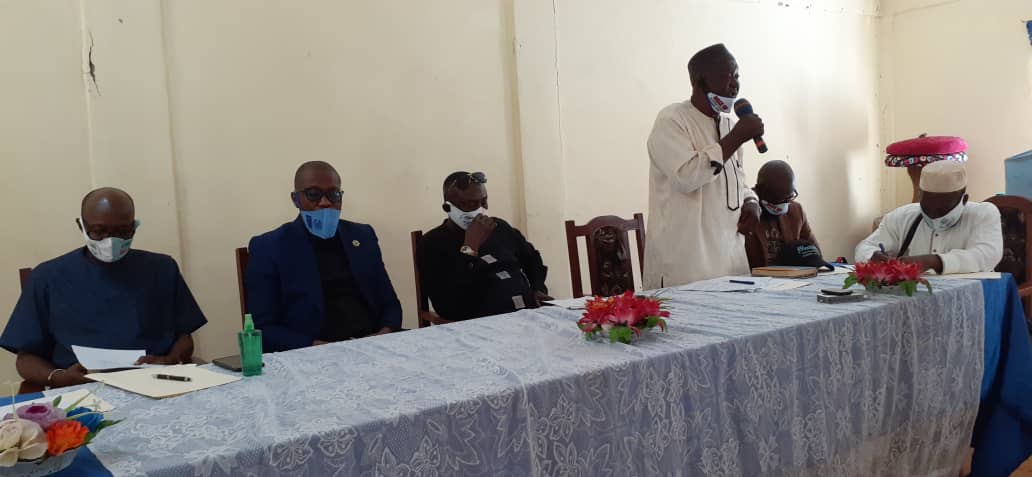
Following violent clashes involving security forces and civilians in Lunsar, Tombo, and recently Makeni, the National Council for Civic Education and Development (NaCCED) in collaboration with the Ministry of Youth Affairs, National Youth Commission (NAYCOM), Peace Africa Alliance Consulting, Educating and Training (PAACET) organized a two-day youth dialogue engagement and stakeholders meeting in Makeni Northern Sierra Leone on August 5th and 6th 2020.
The theme of the engagement was “Distancing Youth from Violence Through Civic Education”, and the overriding objective was to have Makeni youth and key local and national stakeholders dialogue and draw a mental road map of the July 17-18th incidents in the municipality that caused loss of lives and destruction of public and private property. These ugly incidents are justification that drafters of the institution’s Strategic Plan understand the context and were foresighted enough to have a pillar that addresses this type of situation, which provides appropriate corresponding actions through dialogue and effective engagement of young people and all key players. NaCCED’s Makeni response aligns to one of the core program pillars of NaCCED, which bothers on fostering peace and national cohesion.
Welcoming the delegation from Freetown on behalf of the Paramount Chiefs, PC Maasa Yeli Ntham the 111 of Gbanti Chiefdom applauded NaCCED and partners for this civic and patriotic endeavor – engaging young people, creating the platform to share their views on the incident and to encourage them to stay away from violence and trouble. According to him, the Paramount Chiefs who are custodians of the land, culture and tradition have the responsibility to guide and advise the young people. He added that there is need for non-violence engagements “as development programs never thrive in violent societies”. He advised all present at the session to adhere to the rule of law and seek redress through the right channels.
Addressing participants, Kalilu Totangi, NaCCED Chairman said it is the mandate and responsibility of his Council to ensure citizens are engaged, informed, and empowered so they understand their civic rights and responsibilities, through appropriate means and platforms. “People will be guided to use that knowledge or what they know to take actions and demand governments to meet their responsibilities towards them,” he added. The Chairman further stated that the dialogue forum was an event intended to serve as platform to evaluate the July 17th and 18th incidents, and to zoom in on the causes, how it happened, and appropriate preventive actions. “We are here today to sit and have a dialogue in order to get an understanding of the situation and to get a resolution at the end, “he said.
This engagement brought together 120 youth leaders representing 120 youth groups across Makeni city and its immediate environs. Other stakeholders represented in the engagement were the Paramount Chiefs, the Sierra Leone Police (SLP), the Republic of Sierra Leone Armed Forces (RSLAF), Office of National Security (ONS), the District Youth Council, representatives of National and international governmental and Civil Society organizations. Recognizing the role of youth in tackling violence in their communities and the resultant effect it poses on the promotion of peace and national cohesion in the country, the Bombali District Youth Council Chairman Mark Sarah Kamara spoke on behalf of participating youth groups. He described the cooperation of their membership a deliberate effort and manifestation of their commitment to national development. “We have different youth groups participating in this session, including but not limited to Student Unions, bike riders, artists and, youth at risk, and chiefdom youth councils. This is a clear manifestation of our readiness and willingness to embrace peace, love and nation development,” he said. He continued that lack of inclusion and recognition of their leadership which represents various youth groups and organization in the township and the district is a major challenge. “our biggest challenge is that our politicians in this town have not created the platform for us youth to participate in planning and decision making at municipality and district levels”, he lamented. He stressed the need for a District Youth Council office in order to function effectively. He ended with commendation for the central government for establishing the youth councils and appealed to the Ministry of Youth Affairs to support them with office spaces (all youth councils across the country).
Other speakers from the security forces and local non-governmental organizations spoke on the need for peace and stability, and the corresponding relationship to sustainable development. They emphasized the need for thorough and intensive civic education for all in the district, which they said could promote political socialization.
Delivering the keynote address, the Deputy Minister of Youth Affairs, Lusine Kallon said many people are apprehensive of the notion that young people are great performers. To defy this doubt, the Minister called on them to take on this challenge and change the narrative. He said this could be accomplished through unity among young people regardless of political or tribal sentiments and affiliations. He condemned the violent clash between the security forces and the youth. “For every conflict so far, if we as youth, all stakeholders, and as a country do not endeavor to understand the root causes of the conflict, there will be no peace,” he said. He said there is a need to discuss the root causes that trigger violence in the country. He urged the youth to question messages and the carriers of the message on social media platforms.
After the facilitated participatory dialogue, participants were divided into ten (10) groups to discuss the incidents, their causes, the victims, and effects on individual and collective development. Resolutions of this event were presented as a communique to the Government of Sierra Leone through NaCCED for appropriate action. Some of the action points in the communique speak to the need to intensify civic education and leadership trainings at all levels, involve young people in national decision making processes that affect them, proper systems to communicate national issues at all levels, review of policies on police handling of riots and demonstrations, community sensitization and engagements that could help avoid recurrence of such riots among others.
By Patricia Conteh