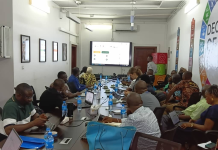

Amnesty International Sierra Leone (AISL) has called for a more strategic, impactful, and values-driven approach to Human Rights Education (HRE) in schools, as it convened a strategic engagement meeting with Teacher Coordinators of Human Rights Friendly School Clubs in the Western Area.
The meeting brought together educators from several secondary and Primary schools, focused on strengthening human rights education as a long-term investment in the future of the country, while also addressing growing concerns around school discipline, teacher conduct, and student responsibilities.
Speaking at the engagement, the Director of Amnesty International Sierra Leone, Mr. Solomon Sogbandi, emphasized that teachers occupy a critical moral position in society, noting that children and the general public look up to them as custodians of values.
“Teachers are moral guarantors. They are mirrors of society, and what they practice in and outside the classroom shapes the attitudes and behaviors of the next generation,” Mr. Sogbandi said, urging educators to uphold honesty, integrity, and best practices in all aspects of their work.
He added that Amnesty International Sierra Leone would continue to support teachers by providing educational packages to enable them to effectively implement human rights education in their respective schools.
Human rights education, participants agreed, goes beyond lectures and assemblies and should be integrated strategically into teaching methods, classroom management, and school culture. Speakers stressed that understanding human dignity, equality, justice, respect, and accountability is essential to preparing young people to question injustice, challenge discrimination, and contribute meaningfully to national development.
Addressing the gathering, Mr. Jaiah Kai Kai, Campaigns Coordinator of AISL, disclosed that Amnesty International has been working with 35 schools in the Western Area, engaging pupils through Human Rights Friendly School Clubs. He urged teacher coordinators to take full ownership of the clubs, noting that Amnesty plans to intensify monthly engagements with schools.
“The strength of Amnesty International lies in its membership. Amnesty is for everyone,” Mr. Kai Kai said, encouraging teachers to motivate pupils, colleagues, and community members to join the movement to promote both rights and responsibilities.
A major theme of the discussion centered on the balance between children’s rights and responsibilities, particularly in light of the government’s policy banning corporal punishment in schools. While participants acknowledged the importance of protecting children from abuse, some teachers raised concerns about the lack of practical alternatives for discipline.
Mrs. Alice Susan Senga of the Sierra Leone Grammar School questioned how discipline could be effectively maintained without corporal punishment, stressing that corrective measures are still necessary to guide children.
“If the cane is removed, there must be other effective methods of correction such as detention or counseling,” she said, adding that parents also need training, as parenting challenges increasingly spill over into the classroom.
Teachers also expressed concern that some education policies are adopted without sufficient consideration of local realities, making implementation difficult. They called for contextualized approaches that reflect the social and economic conditions of the country.
Discussions further highlighted the need for human rights education to address critical thinking, empathy, dialogue, and respect for diversity among pupils. Teachers were urged to be analytical in dealing with students of different personalities, including extroverts, introverts, and those facing behavioral or socio-economic challenges.
Participants also raised alarm over abuse of power within educational institutions, particularly cases of sexual exploitation and coercion by male lecturers, stressing that such practices undermine dignity, equality, and the integrity of the education system.
A representative of the teachers’ clubs noted that educators have a responsibility not only to teach but to provide solutions to challenges such as drug abuse among students, rather than remaining passive observers.
AISL also announced plans to expand education on girls’ rights, including menstrual health management and psychosocial support, to ensure a safer and more inclusive learning environment for female pupils.