By Sahr Ibrahim Komba
Sierra Leone has made significant legal progress in protecting the rights of women and girls, introducing some of the strongest gender and child protection laws in the region. Despite these legal reforms, violence, abuse, and exploitation against women and girls continue to occur across the country, raising a troubling question: Are women and girls truly safe?
Over the years, Sierra Leone has enacted several laws aimed at protecting women and children from abuse, discrimination, and exploitation. These include the Child Rights Act 2025, the Prohibition of Child Marriage Act 2024, the Registration of Customary Marriage and Divorce Act 2009, the Basic Education Act 2023, and the Sexual Offences Act 2019 as amended.
Collectively, these laws seek to guarantee children’s rights, criminalize child marriage, protect girls’ access to education, and punish perpetrators of sexual and gender-based violence. However, while the laws exist on paper, implementation remains a major challenge.
In some parts of the country, particularly in rural communities, young girls continue to be denied education and forced into marriages with men old enough to be their fathers or even grandfathers. The evidence is visible and often publicly shared.
In late May 2026, a social media platform known as Born 2 Blog posted photographs allegedly showing a young girl being married to an older man. The images quickly sparked outrage on social media, with many Sierra Leoneans condemning the incident and questioning the platform’s handling of the matter.
Critics accused the platform of acting unprofessionally by exposing the identity of the alleged victim, while others raised concerns about the language used in describing the situation. Yet beyond the debate over media ethics, one issue stood out clearly to many observers: a potential crime had been committed.
Under the Prohibition of Child Marriage Act 2024, promoting, encouraging, facilitating, or even attending a child marriage ceremony is a criminal offence in Sierra Leone. Individuals found guilty can face prison sentences ranging from 10 to 15 years, fines between Le50,000 and Le100,000, or both, depending on the nature of the offence.
Days after the publication of the photographs, authorities from the Ministry of Gender and Children’s Affairs announced that suspects connected to the alleged child marriage had been arrested and detained. The arrests reportedly included the alleged perpetrator and some family members, in line with provisions contained in both the Prohibition of Child Marriage Act and the Child Rights Act 2025.
Days after that incident, another disturbing allegation emerged online. Popular female entertainer Vida Green publicly alleged that she had endured years of rape, sexual assault, and emotional trauma at the hands of someone she deeply trusted.
In an emotional statement shared on social media, she alleged that she was repeatedly sexually abused by a person she loved and trusted despite her objections and repeated pleas for the abuse to stop. She explained that fear, shame, and concerns that she would not be believed kept her silent for years.
Although Vida Green did not publicly specify the exact nature of her relationship with the alleged abuser, her statement reignited national conversations about sexual violence, consent, and the silence many victims endure.
The Sexual Offences Act 2019, as amended, makes it clear that marriage is not a defense against rape or sexual assault. Under Sierra Leonean law, a husband or wife can still be prosecuted for committing sexual offences against their spouse. Persons convicted of rape may face prison sentences ranging from five to fifteen years.
The allegations involving Vida Green have led many to reflect on the vulnerability of ordinary women and children who lack public visibility, financial independence, or social influence.
If a woman with public exposure, confidence, and social influence can allegedly experience such abuse in silence, what happens to children and vulnerable women with little support or protection?
Recent incidents involving child marriage and sexual abuse suggest that while Sierra Leone has strengthened its legal framework, many women and girls still live in fear. Laws alone are not enough when social attitudes, stigma, poverty, and weak enforcement continue to enable abuse.
Child marriage and violence against women remain especially common in rural communities, where such cases are often underreported, hidden within families, or normalized through tradition and cultural beliefs.
In some communities, older women defend early marriage by arguing that they themselves were married between the ages of 12 and 14 and “survived it.” To many, child marriage is viewed not as abuse, but as a cultural norm. Reporting husbands or partners for sexual abuse is also widely considered taboo in certain settings.
Fear of stigma, shame, victim-blaming, and family pressure continue to discourage many survivors from reporting sexual violence or child marriage. In many communities, awareness of existing laws and the penalties attached to violations remains very low.
In July 2024, Sierra Leone took a landmark step by enacting the Prohibition of Child Marriage Act, a law widely praised by international organizations and child rights advocates.
The legislation criminalizes marriage or cohabitation involving persons under the age of 18 and introduces stronger penalties for offenders, including parents, guardians, facilitators, and attendees of child marriage ceremonies.
The law also provides for counseling, rehabilitation, and educational support for victims.
The move came in response to Sierra Leone’s alarming child marriage statistics, among the highest globally.
According to data published by UNICEF, UNFPA, and the UNFPA-UNICEF Global Programme to End Child Marriage:
* Approximately 800,000 women and girls in Sierra Leone were married before the age of 18.
* Between 30% and 39% of girls are married before their 18th birthday.
* Around 9% to 13% are married before the age of 15.
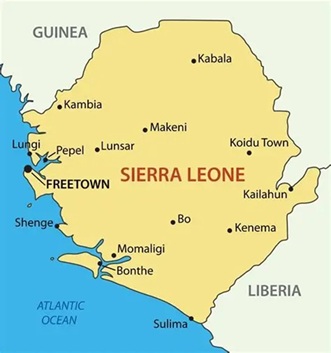
* Districts such as Koinadugu, Tonkolili, Kambia, and Port Loko record some of the highest prevalence rates in the country.
Experts say poverty remains one of the major drivers of child marriage. In struggling households, marrying off daughters is often viewed as a survival strategy to reduce financial pressure or obtain economic support through dowry arrangements.
Limited access to education also increases vulnerability. Studies indicate that girls with little or no education are significantly more likely to marry early than those who remain in school.
Gender inequality and deeply rooted patriarchal beliefs further sustain the practice. In some communities, girls are still viewed primarily as wives and mothers, while boys’ education is prioritized.
Child marriage also has severe health consequences. Sierra Leone continues to record one of the world’s highest maternal mortality rates, with teenage pregnancy contributing to nearly 40% of maternal deaths nationwide.
Advocates warn that child marriage robs girls of their education, economic opportunities, independence, and future potential.
While Sierra Leone’s legal reforms represent important progress, campaigners argue that laws alone cannot end abuse against women and girls.
Ending child marriage and sexual violence will require stronger law enforcement, increased public awareness, improved access to education, economic empowerment for vulnerable families, and sustained community engagement to challenge harmful cultural norms.
Religious leaders, traditional authorities, schools, civil society organizations, parents, and the media all have critical roles to play in protecting women and girls.
The growing public discussions around child marriage and sexual abuse may signal that Sierra Leone is becoming more willing to confront these issues openly. Yet, until victims can live without fear, stigma, or silence, many believe the country’s women and girls will remain vulnerable despite the protections guaranteed by law.
The statistics and findings referenced in this article are based on reports and data published by UNICEF, UNFPA, the UNFPA-UNICEF Global Programme to End Child Marriage, Sierra Leone Demographic and Health Surveys (DHS), and advocacy organizations, including Girls Not Brides.