By Sahr Ibrahim Komba
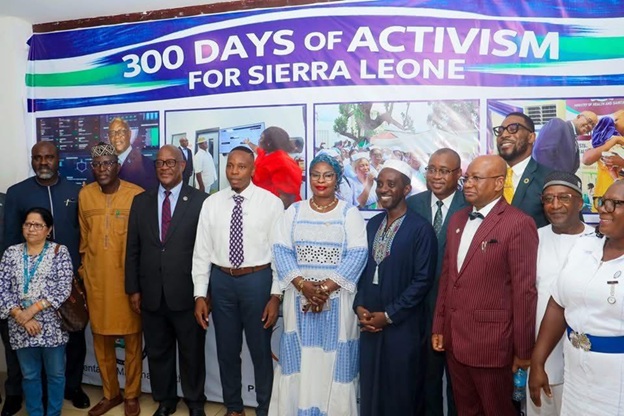
Sierra Leone has embarked on an ambitious national campaign aimed at transforming the country’s health outcomes through the “300 Days of Activism for Triple Zero.” The initiative seeks to accelerate efforts to eliminate preventable maternal deaths, preventable child deaths, and zero-dose children, three persistent challenges that continue to affect the country’s healthcare system.
Led by the Ministry of Health and Sanitation Sierra Leone and supported by development partners, the campaign represents a decisive shift from policy commitments to aggressive implementation, accountability, and measurable results. The initiative has received strong political backing from President Julius Maada Bio, reflecting the government’s determination to address one of the country’s most pressing public health issues.
Health experts believe that the 300-day campaign could mark a turning point in Sierra Leone’s efforts to strengthen maternal and child healthcare services and meet global health targets.
Despite improvements in recent years, Sierra Leone continues to face serious maternal and child health challenges. Historically, the country has recorded one of the highest maternal mortality rates globally, with many women dying from complications related to pregnancy and childbirth that could have been prevented with timely and adequate medical care.
Programs such as the Free Health Care Initiative, introduced in 2010 by former President Ernest Bai Koroma, significantly improved access to healthcare services for pregnant women, lactating mothers, and children under five. However, systemic challenges remain, including shortages of trained health personnel, weak referral systems, inadequate infrastructure, and delays in accessing care in rural communities.
To accelerate progress toward global targets such as Sustainable Development Goal 3, which focuses on good health and well-being, the government working closely with partners including UNICEF and the World Health Organization launched the 300 Days of Activism for Triple Zero campaign.
The initiative is designed to mobilize national attention and coordinated action across all levels of the healthcare system over a sustained period of 300 days, focusing on rapid implementation of life-saving interventions.
At the heart of the campaign are three ambitious goals known as the Triple Zero targets:
- Zero preventable maternal deaths
- Zero preventable child deaths
- Zero-dose children (children missing routine vaccines)
According to the Minister of Health, Dr.Austin Demby, the campaign is not simply an aspirational vision but an operational strategy aimed at eliminating systemic failures within the healthcare system.
“Preventable deaths will now be treated as system failures, with clear accountability at district and facility levels,” the minister emphasized during the launch of the campaign.
One of the campaign’s central priorities is reducing maternal mortality. Preventable maternal deaths typically occur due to complications such as severe bleeding, infections, high blood pressure during pregnancy, obstructed labour, and unsafe abortions.
Under the 300 Days of Activism, the government plans to strengthen maternal healthcare through several key interventions, including:
- Expanding access to skilled birth attendants at health facilities
- Improving antenatal and postnatal care services
- Strengthening emergency obstetric and newborn care
- Enhancing referral systems between community health posts and hospitals
- Ensuring adequate supplies of essential medicines and equipment.
Community engagement will also play a critical role. Traditional leaders, community health workers, and local councils are expected to promote early antenatal visits and facility-based deliveries, particularly in rural areas where access to healthcare remains limited.
The goal is to ensure that no woman dies while giving life due to preventable causes.
The second pillar of the campaign focuses on reducing deaths among children under five years of age. Many of these deaths are caused by diseases that are largely preventable or treatable, including malaria, pneumonia, diarrhoea, and malnutrition.
Through the campaign, the health sector aims to strengthen child survival strategies by:
- Expanding routine immunization coverage.
- Improving early diagnosis and treatment of childhood illnesses.
- Strengthening nutrition programs to address stunting and wasting.
- Promoting exclusive breastfeeding and improved infant feeding practices.
- Expanding community-based healthcare services.
Community Health Workers will play an important role in identifying sick children early and ensuring timely referral to health facilities.
Improving water, sanitation, and hygiene practices is also considered essential, as poor sanitation and unsafe drinking water contribute significantly to childhood illnesses.
Another key focus of the campaign is identifying and vaccinating zero-dose children those who have not received any routine vaccines, particularly the first dose of the diphtheria-tetanus-pertussis (DTP) vaccine.
These children are often found in:
Remote rural communities,urban informal settlements,areas with weak health infrastructure and families with limited awareness about vaccination
To address this challenge, the campaign will expand outreach services through:
- Mobile vaccination teams.
- Community mapping and household visits.
- Outreach immunization campaigns in hard-to-reach areas.
- Community awareness initiatives to build trust in vaccines.
Reducing the number of zero-dose children is essential for preventing outbreaks of vaccine-preventable diseases and ensuring equitable access to healthcare services.
One of the distinctive features of the 300 Days of Activism is its strong emphasis on accountability and real-time monitoring.
Under the campaign framework, the Ministry of Health will implement several new oversight mechanisms, including:
- Weekly district-level performance reviews.
- Real-time monitoring dashboards.
- Mandatory reporting of maternal deaths within 24 hours.
- Establishment of district-level “situation rooms” to track health indicators.
- Immediate escalation of unresolved health system bottlenecks.
These measures are intended to replace slower periodic review systems with rapid data-driven decision-making that allows problems to be addressed immediately.
The campaign also adopts a multi-sectoral approach, recognizing that improving maternal and child health requires collaboration beyond the health sector.
Government ministries responsible for education, water and sanitation, gender affairs, and local government will work together to address the broader social and environmental factors affecting health outcomes.
Civil society organizations and professional bodies including Sierra Leone Medical and Dental Association and Focus 1000 have also pledged to support the initiative through community engagement, technical assistance, and improved service delivery.
Delivering the keynote address at the launch, the Chief Minister Dr.David Moinina Sengeh described the campaign as a central pillar of Sierra Leone’s broader development agenda.
He emphasized that the initiative aligns with the government’s vision of building an inclusive, middle-income country by 2039, stressing that universal access to quality healthcare is essential for national development.
The Minister of Information and Civic Education, Chernor Bah, described the campaign as a turning point in the country’s health narrative, highlighting examples of improved maternal care services at newly established centers of excellence in Kono District.
While officials acknowledge that Sierra Leone remains off track in achieving some global maternal and child health targets, they believe the 300 Days of Activism for Triple Zero provides a critical opportunity to accelerate progress.
With strong political will, coordinated partnerships, and increased accountability within the health system, stakeholders are optimistic that the campaign will produce tangible results.
The launch concluded with a nationwide call for government institutions, healthcare workers, community leaders, and citizens to unite behind the initiative.
As one speaker noted, “Every mother saved is a family saved. Every child protected is the future secured.”
For Sierra Leone, the message behind the 300-day campaign is clear: ending preventable maternal and child deaths is no longer an aspiration, it is a national obligation.