
By Sahr Ibrahim Komba
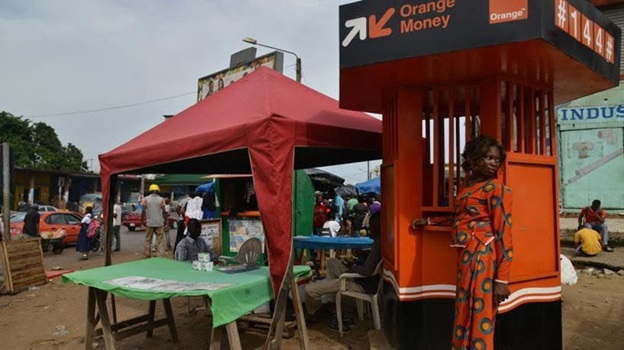
Across Africa, the platform economy is transforming the way people work, transact, and access services. From mobile money agents in the streets of Freetown to ride-hailing drivers and e-commerce couriers in major cities, digital platforms are creating unprecedented opportunities for employment, entrepreneurship, and financial inclusion.
Yet this rapid expansion has also exposed workers to significant risks, highlighting urgent gaps in regulation, social protection, and labour rights.
At the 52nd Governing Council Meeting of the African Regional Labour Administration Centre (ARLAC) held in Freetown, Kobi Walker, President of the Sierra Leone Employers’ Federation (SLEF), delivered a powerful call for a balanced regulatory framework to guide Africa’s platform economy.
“Businesses need clarity to innovate while ensuring fair play,” Walker said. “Innovation should not come at the cost of fairness and protection for workers.”
Walker, speaking at a forum attended by ministers, labour stakeholders, and regional policymakers, outlined both the opportunities and the challenges associated with digital labour platforms. He emphasized that platforms like Uber, Bolt, and Yango, as well as informal giants such as Jumia, offer immense potential for employment, particularly in countries with youthful populations.
Globally, the gig economy was valued at $556 billion in 2024 and is projected to exceed $2.1 trillion by 2033. Across Africa, an estimated 36 million gig workers rely on over 230 million mobile money accounts to participate in the digital economy. In Sierra Leone, where nearly 77 percent of the population is under 25, digital platforms can serve as a critical mechanism to tackle high levels of youth unemployment and underemployment while fostering entrepreneurship and financial inclusion.
“The platform economy offers a vital pathway to formalization and decent work for our youth,” Walker said. He highlighted sectors such as ride-hailing, e-commerce logistics, and mobile money services, which are already transforming access to services and markets. The widespread adoption of mobile money platforms, exemplified by Kenya’s M-Pesa, demonstrates how digital payments can stimulate economic activity, enhance financial inclusion, and support small businesses in reaching new markets.
Digital platforms also provide flexible work arrangements, allowing individuals, particularly women and young people, to earn income without formal employment. These platforms can create new avenues for skills development, entrepreneurship, and market expansion. Walker stressed that the expansion of mobile money, delivery services, and digital marketplaces presents an opportunity for African governments to integrate innovative employment solutions into broader socio-economic policies.
Despite these opportunities, Walker warned that the rapid growth of the gig economy comes with significant policy and regulatory challenges. Among the key concerns:
- Unclear employment classifications, which leave workers in legal grey areas and exclude them from labour protections
- Limited access to social protection, including health insurance, pension schemes, and injury compensation
- Algorithm-driven management, which controls work allocation, pay rates, and account deactivation
- Absence of collective bargaining mechanisms, preventing workers from negotiating fair conditions
- Gender inequality, with women comprising only about 27 percent of online gig workers in sub-Saharan Africa and facing barriers such as limited access, safety concerns, and unequal pay
Most gig workers in Sierra Leone operate without access to health insurance, pension coverage, or injury protection, leaving them particularly vulnerable during economic shocks. Currently, only about 8.3 percent of Sierra Leone’s workforce is covered by the National Social Security and Insurance Trust (NASSIT), underscoring the urgency of expanding protection mechanisms for digital workers.
In the mobile money sector, where agents serve as the backbone of digital transactions, workers often handle large volumes of cash without adequate security or formal recognition. These agents generate significant revenue for companies but receive minimal compensation and limited benefits.
Adama Sesay, an agent for Orange Money, QMoney and Afrimoney, described the challenges vividly:
“I make huge amounts of money for these network companies, but what I get in return is very small. There are no end-of-service benefits, no insurance, nothing like what formal employees receive.”
Similarly, Umar Turay, another mobile money agent, emphasized the precarious nature of their work:
“On a daily basis, I handle transactions of twenty to thirty thousand Leones. Over a week or a month, the total is substantial, yet my earnings remain minimal. We generate large revenues for the companies but are not recognized as employees. We do not have leave allowances, medical benefits, or end-of-service packages.”
Both Sesay and Turay stressed the urgent need for government regulation, calling for policies that establish clear employment classifications, mandatory insurance coverage, transparent commission structures, effective grievance mechanisms, and safeguards against unfair deactivation.
The risks extend beyond financial insecurity. Agents frequently handle large sums of cash in informal settings, making them targets for theft. Furthermore, mistakes such as sending money to the wrong account can result in immediate and irreversible losses, with little recourse for recovery. While some network providers offer limited safeguards, these are often inconsistent, unreliable, and dependent on physical office visits.
International experiences offer valuable lessons for Africa. In the United States, federal and state governments are actively regulating platform work. California’s Proposition 22 created a hybrid classification for app-based drivers, granting certain benefits while maintaining independent contractor status. Washington State recently introduced minimum pay standards for delivery workers.
In Australia, the Fair Work Legislation Amendment (Closing Loopholes No. 2) Act 2024 introduced a new category of “employee-like” workers, offering enhanced protections against unfair deactivation, minimum pay standards, and collective bargaining rights. The law also empowers the Fair Work Commission to set minimum standards for insurance, deductions, and working conditions.
Similarly, the European Union’s Platform Work Directive (2024) establishes legal presumptions of employment and regulates algorithmic management. Platforms must provide human oversight, ensure transparency in automated decision-making, and prevent unjust account suspensions.
At the international level, the International Labour Organization (ILO) is finalizing its first global labour standards for platform workers, expected to be adopted at the 2026 International Labour Conference. The proposed convention will cover worker misclassification, algorithmic management, fair remuneration including pay for waiting time, social protection, and safeguards against arbitrary deactivation.
Even before formal adoption, the ILO maintains that fundamental rights, including freedom of association, non-discrimination, and occupational safety, apply to all platform workers.
To ensure a fair and inclusive platform economy, SLEF has proposed a seven-point policy framework for African governments:
- Establish clear employment classifications for digital workers
- Promote social dialogue among governments, employers, and workers
- Expand social protection systems, including health and pension coverage
- Ensure gender-inclusive policies, addressing barriers to women’s participation
- Increase transparency in algorithmic management systems
- Protect workers from unfair account deactivations
- Align national policies with emerging global labour standards, including those of the ILO
Walker emphasized that regulatory clarity is essential for both innovation and worker protection.
“The platform economy can transform our labour markets,” he said. “But for it to succeed sustainably, innovation must be matched with fairness, protection, and dignity for those who power it.”
The platform economy is no longer a niche sector; it is a central pillar of Africa’s digital transformation. It has lowered barriers to entry, created new income streams, and facilitated financial inclusion. Yet as the experiences of workers like Adama Sesay and Umar Turay illustrate, digital convenience must not come at the cost of dignity and security.
For Africa, the challenge is clear: expand access, promote entrepreneurship, and build regulatory frameworks that protect the millions driving these systems’ growth. With lessons from the United States, Australia, and the European Union, coupled with emerging ILO standards, African countries have a unique opportunity to lead in creating a platform economy that is both innovative and equitable.
The time to act is now. For the millions of youth, women, and informal workers relying on digital platforms, the promise of the gig economy must be matched with concrete protections, fair pay, and recognition turning opportunity into sustainable, dignified work for all.