By Sahr Ibrahim Komba
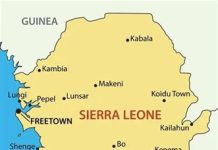
Cemeteries once regarded as sacred spaces of rest and remembrance are steadily descending into neglect. Across Freetown, overcrowded, poorly maintained, and in some cases desecrated, these burial grounds now reflect a deepening urban, institutional, and moral crisis.
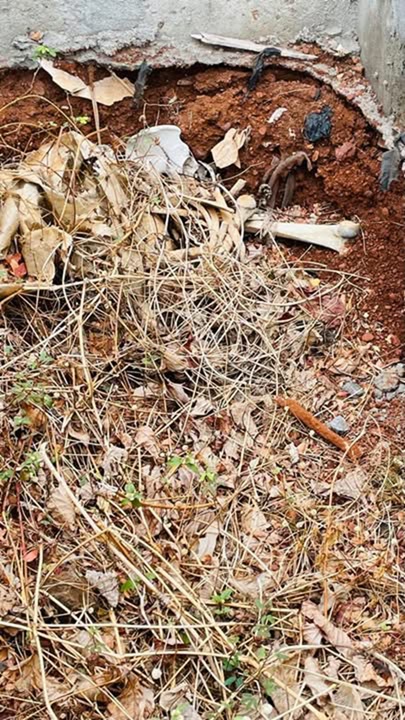
At the Kissy Road Cemetery, the sight of exposed human remains has become a deeply disturbing reality. What should serve as a place of solemn dignity instead reveals the consequences of limited burial space, weak management systems, and years of institutional neglect. Similar conditions have also been observed at Race Course Road, Circular Road, Palmer Street, Kingtom, and Kissy Mess Mess cemeteries, among others, where indiscriminate dumping, encroachment, and poor sanitation have further eroded their sanctity.
The growing deterioration raises urgent questions about how the city treats its dead and, by extension, how it values the living.
These cemeteries are sacred grounds of memory, holding the remains of compatriots from every walk of life, the young and the old, the rich and the poor. Among them lie many of the nation’s leaders and some of its most influential figures, including eminent legal scholars who helped shape Sierra Leonean society. In time, we too will take our place among them.
No one would expect to be met with neglect in death. The dignity expected in life must extend beyond it. Caring for cemeteries is not optional; it is both a moral obligation and a national responsibility that must be treated as a priority.
Cemetery management in Sierra Leone is guided by legal frameworks such as the Public Health Act (2023), the Burials Registration (Freetown) Act (Cap 94), and municipal by-laws enforced by the Freetown City Council. These laws empower authorities to regulate burials, maintain records, and uphold public health standards.
Yet, the reality on the ground tells a far different story.
Many burial grounds have already reached capacity. In several cases, new graves are dug in areas where decomposition remains incomplete, exposing bones and human remains. For cemetery workers, this has become a routine yet deeply troubling aspect of their daily work.
“We see bones, sometimes bodies that have not fully decomposed,” one worker admitted. “We are used to it now. That is why we usually take hard liquor,” he added.
Such conditions not only undermine human dignity but also pose serious public health risks in a densely populated city.
Behind the deteriorating state of the cemeteries are the workers who maintain them often invisible, underpaid, and unsupported.
For more than two decades, some have laboured in cemeteries across Kissy, Lumley, Aberdeen, Circular Road, Race Course Road, and Kingtom. Their work is physically exhausting and emotionally draining, yet essential to public health and community life.
“Since 2003, I’ve been here,” one veteran worker explained. “But the tools we need, we often have to buy ourselves or simply go without.”
Basic equipment such as shovels, gloves, pickaxes, and protective gears are frequently unavailable. Requests for supplies can take months or even years to be addressed, that is if they are addressed at all. Without these tools, grave digging becomes not only difficult but dangerous.
Compounding these challenges are irregular wages and the absence of formal employment recognition. Many workers report delays in payment, with some surviving on small and inconsistent fees tied to burial activities, particularly Muslim burials. Despite years of service, many still lack pensions, healthcare, and job security.
“We just manage,” another worker said quietly.
The process of obtaining burial permits is also fraught with confusion. Families are often forced to navigate between cemetery workers and council offices, with payments sometimes made in multiple locations. This fragmented system creates room for misunderstanding and weakens transparency.
It reflects broader governance challenges in municipal service delivery where policies exist, but implementation consistently falls short.
The condition of cemeteries has also shaped public attitudes. Some families now choose to transport their deceased relatives back to provincial communities for burial, citing concerns over dignity and respect.
“People say we have rituals,” one resident explained. “But it’s not about that. It’s about giving our loved ones a dignified burial.”
Such sentiments reveal a growing loss of confidence in urban burial systems and a perception that the dead are no longer treated with the respect they deserve.
Encroachment on cemetery land and the use of burial sites as dumping grounds further reinforce these concerns, raising serious questions about enforcement and collective community responsibility.
Beyond legal obligations, the care for the dead is deeply rooted in moral and religious values.
Both the Bible and the Qur’an emphasize the importance of dignified burial and respect for the deceased. In the Bible, burial is portrayed as an act of righteousness from Abraham burying his wife to the careful burial of Jesus Christ. Similarly, the Qur’an (5:31) presents burial as a divinely guided practice and underscores the need to honour the dead.
While these scriptures do not prescribe detailed systems of cemetery management, their message remains clear: the dead must be treated with dignity, and society bears a collective responsibility to uphold that standard.
Underlying the cemetery crisis is a broader issue: an erosion of trust, accountability, and public responsibility.
Truth, it seems, has become increasingly elusive. In a climate shaped by suspicion and division, even visible realities are often dismissed or politicized. When concerns about cemetery conditions are raised, they are sometimes viewed through partisan lenses rather than addressed on their merit.
Yet truth remains constant. It does not bend to convenience or political allegiance. The visible state of cemeteries overcrowded, neglected, and at times desecrated speaks for itself. Ignoring these realities only deepens the crisis.
There is therefore a compelling case for immediate and sustained action. Authorities must consider closing overcrowded cemeteries temporarily to allow restoration and prevent further degradation. At the same time, new land must be allocated for burial purposes, guided by proper urban planning and regulation.
Equally important is the urgent need to support cemetery workers through:
*Formal employment recognition and fair wages
*Provision of tools and protective equipment
*Access to healthcare and retirement benefits
*Clear, transparent, and accountable burial procedures
Without these measures, the system will continue to strain and may ultimately collapse.
Cemeteries are more than physical spaces; they are reflections of societal values. They reveal how a nation honours its past and respects its people.
In Freetown, the silence of the graveyard now carries a message of neglect, resilience, and an urgent call for change.
As one worker asked while standing beside a freshly dug grave:
“We do this work for the country. But who is there for us?”
It is a question that demands not only reflection, but decisive action.
🚨Readers/Viewers discretion Advised❗️