By Sahr Ibrahim Komba
Social media has become one of the most powerful forces of the modern world, shaping how young people communicate, learn, and connect. But behind the entertainment and convenience lies a growing concern: its quiet ability to steal time, distract attention, and erode productivity among the youth.
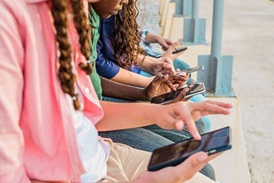
Platforms are deliberately designed to keep users hooked. Infinite scrolling, autoplay videos, personalized feeds, and the fear of missing out (FOMO) stimulate the brain’s reward system, creating an addictive cycle of likes, comments, and constant updates. As a result, many young people unknowingly spend hours online, sacrificing sleep, study time, exercise, and meaningful face-to-face interaction.
Research continues to show troubling effects. Excessive social media use is linked to poor sleep patterns, lower physical activity, anxiety, poor self-esteem, weaker communication skills, and declining academic performance. Experts recommend setting daily screen limits, encouraging offline hobbies, turning off nonessential notifications, and promoting open conversations about the impact of technology.
Long before today’s digital platforms, media theorist Marshall McLuhan predicted a “global village” where electronic media would shrink distance and accelerate communication. His predictions, published in The Gutenberg Galaxy (1962) and Understanding Media (1964), have become reality in an age where Facebook, YouTube, TikTok, and X instantly connect billions. But this interconnectedness has also brought new challenges-misinformation, privacy concerns, and rising digital dependency.
Despite its risks, social media remains a powerful tool for education, expression, and global engagement. When used well, it can empower. When overused, it becomes a silent thief of time.
Nigeria’s technology chief, Kashifu Inuwa Abdullahi, recently told France 24 that African countries must take charge of their digital spaces by shaping local content policies instead of relying solely on global standards. He urged African youth to use digital platforms responsibly by promoting digital safety, strengthening democracy, and building in-demand skills. Indeed, social media has demonstrated its power-from mobilizing citizens during the Arab Spring to amplifying voices across the continent.
In Sierra Leone, however, a major policy gap remains. Existing laws protect children online but do not regulate how much time minors spend on social media.
The effects are becoming increasingly visible: pupils livestreaming from classrooms, recording TikTok videos during lessons, and losing concentration-behaviours linked to falling academic performance and poor classroom engagement. Analysts warn that unregulated screen time among schoolchildren threatens educational standards.
Other nations have taken decisive action. France bans smartphone use in schools for students under 15. Luxembourg will prohibit smartphones in primary schools by April 2025 and restrict them in secondary schools. Austria will roll out similar restrictions by May 2025. These steps reflect a global consensus that children must be shielded from digital distractions to learn effectively.
The consequences extend beyond classrooms. In many public hospitals nationwide, caregivers have been seen neglecting patients while focused on TikTok or chatting online-even during critical moments. Families report loud videos disrupting wards and have raised concerns about preventable suffering and even deaths linked to caregiver negligence. A similar trend exists in public offices, where civil servants often prioritize scrolling over serving citizens, resulting in long queues and poor service delivery.
Global findings reinforce the urgency of action. A September 2024 WHO report revealed a sharp rise in problematic social media and gaming habits among adolescents in 44 countries. Symptoms included withdrawal, loss of control, neglect of responsibilities, and significant disruptions to daily life. The report emphasized empowering youth to balance online and offline experiences.
A recent Ethiopian study by scholars Atinafu Regasa and Demelash Lemmi Ettisa found that TikTok’s popularity among students comes at a cost: more than two hours of daily use negatively affects academic performance, mental health, social interactions, and overall well-being.
All signs point to a single truth: regulating smartphone and social media use for children and youth is no longer optional-it is necessary.
For Sierra Leone, this means developing clear policies that ensure technology strengthens learning, enhances productivity, and supports national development.
The question at the end of the day is not whether social media is good or bad. It is how we choose to use it. Used wisely, it can connect, educate, and empower. Used carelessly, it can quietly drain the time, energy, and potential of the very youth who represent the future.