By Sahr Ibrahim Komba
A startling security lapse at the Presidential Lodge in Freetown has raised serious concerns about the safety of His Excellency President Julius Maada Bio, the First Lady, and the First Family, prompting urgent calls for a thorough and transparent investigation.
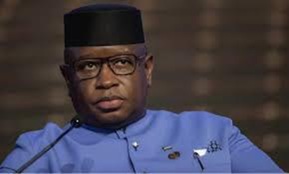
Speaking during an end-of-year party organized by the President and the First Lady for staff and security personnel attached to the Presidency, President Bio disclosed that an unidentified individual unlawfully entered the presidential residence and stole a bag of rice from the kitchen where food for the First Family is stored and prepared. Even more troubling, the thief reportedly entered and exited the premises without being detected.
This revelation has sparked widespread public outrage and deep anxiety over the integrity of security at the highest seat of power in the country. The President, as Head of State and Commander-in-Chief of the Armed Forces and Chairman of ECOWAS is the most protected individual in the nation. Any breach within the presidential residence, however minor it may appear, constitutes a grave national security concern.
Critics argue that if a thief could gain access to the Presidential Lodge unnoticed, it raises disturbing questions about potential vulnerabilities that could be exploited for far more dangerous purposes. Others believe that such an incident should have been quietly investigated and decisively addressed rather than publicly disclosed, while some suggest that the full details of what transpired may not yet be known.
Another school of thought points to the likelihood of an insider’s involvement, noting that it would be nearly impossible for an ordinary citizen unfamiliar with the layout and security arrangements of the Presidential Lodge to gain access to restricted areas such as the kitchen. This perspective underscores the urgent need to examine internal security protocols and personnel screening mechanisms.
In many countries, heads of state and their families are protected by multiple, overlapping layers of security. In the United States, for example, the President is guarded around the clock by the Secret Service, supported by advanced surveillance systems, intelligence agencies, and strict access-control measures. Similarly, in the United Kingdom, the Prime Minister and royal residences are under constant armed protection, while in France, South Africa, and Ghana, presidential security includes elite units, surveillance technology, and continuous risk assessments.
These examples highlight the seriousness with which presidential security is treated globally and why any breach at Sierra Leone’s Presidential Lodge must not be downplayed.
The fact that the theft occurred in a kitchen where food for the President is prepared further magnifies the gravity of the incident. Beyond physical security, it raises concerns about food safety and the potential risk of poisoning, a threat that security agencies worldwide treat with utmost seriousness.
In this era of advanced technology, security analysts argue that reliance on manual patrols alone is no longer sufficient. The use of CCTV cameras, access-control systems, motion sensors, and digital surveillance tools is now standard practice in protecting heads of state. A political analyst has called on security authorities to deploy technology-driven investigations to identify the perpetrator and restore public confidence.
Members of the public are now demanding that CCTV footage from the Presidential Lodge be reviewed and, where appropriate, presented to the President to establish how the breach occurred. There are also renewed calls for the installation of security cameras at all strategic points within and around the presidential residence.
The safety of the President and the First Family is not a private matter it is a national priority. The state cannot afford complacency or secrecy in the face of such a serious lapse. An immediate, independent, and comprehensive investigation must be conducted, those responsible held accountable, and concrete measures implemented to prevent a recurrence.
Anything less would undermine public trust and expose the nation’s highest office to unacceptable risk.