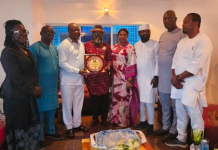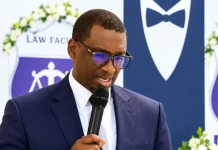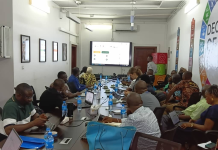

The Deputy Attorney General and Minister of Justice, Saptieu Saccoh Esq., has issued a strong warning against Sierra Leone’s current approach to tackling kush abuse, stressing that an enforcement-driven response that neglects care, rehabilitation, and human dignity poses a serious threat to lives and national stability.
Speaking at the launch of a video documentary and report on the Human Rights Implications of Kush, Madam Saccoh said the fight against drugs must be firmly rooted in human rights, particularly the right to life, health, and dignity.
“A criminal response that prioritizes punishment over care is not only ineffective, it is dangerous,” she declared. “Enforcement alone is not sufficient. When the response to drug abuse strips victims of their humanity, it violates their fundamental rights, including the right to life itself.”
She called on the government to urgently strengthen and expand rehabilitation programmes, noting that victims of drug abuse should be treated as persons in need of protection and support, not merely as offenders. “Humanity is the foundation of any nation,” she said, urging authorities to ensure that the report’s recommendations translate into concrete action rather than remaining a ceremonial document.
The documentary and report was unveiled by the Human Rights Commission of Sierra Leone, which described the findings as a sobering account of widespread abuse, neglect, and systemic failures surrounding kush addiction.
Director of the Commission, Sidratu Kargbo, said the report captures the lived realities of victims and exposes critical barriers to rehabilitation and treatment, as well as the heavy-handed conduct of some security agencies. She emphasized that the Commission conducted the investigation with professionalism and evidence-based documentation.
“This report is more than a documentary; it is a human rights intervention,” madam Kargbo said, reaffirming the Commission’s commitment to working with all stakeholders in the national fight against drug abuse.
The Deputy Vice Chairman of the Commission Victor Lansana described the documentary as revealing “serious and disturbing human rights violations,” accusing some law-enforcement officers of exploiting kush victims. He cited allegations of sexual abuse, extortion, and double standards, including claims that some officers smoke kush with users and later arrest them for unlawful possession.
He linked the current drug crisis to longstanding socio-economic challenges, recalling that the Truth and Reconciliation Commission (TRC) identified unemployment and lack of access to basic amenities as root causes of the civil war. “An idle brain is the devil’s workshop,” he said, adding that unemployment remains a major driver of drug addiction among young people.
According to him, drug abuse undermines multiple rights, including the rights to health, education, and personal security, and poses a grave threat to the nation’s youth, whom he described as “the future now trapped in addiction.”
In his statement, Richard Tamba M’bayo said the report documents the experiences of drug abuse victims across the country, highlighting widespread discrimination, marginalization, and social breakdown affecting people aged 14 to 50. He noted that victims include university graduates and students who were preparing for examinations before addiction derailed their lives.
M’bayo identified peer pressure, extreme addiction, and unemployment as key factors driving kush abuse, accusing some law-enforcement officers of worsening victims’ suffering instead of alleviating it. He said many victims are forced to sleep on the streets or at dumping sites due to social rejection.
He further alleged that enforcement efforts often target users rather than wholesalers, claiming that confiscated drugs are sometimes not destroyed but allegedly returned to circulation. He described the situation as “serious and normalized,” calling for urgent national intervention.
The Commission recommended the establishment of technical and vocational training centres nationwide, properly equipped and government-managed rehabilitation facilities, and intensified public awareness campaigns on the dangers of kush. It also called for a strategic national framework that balances law enforcement with prevention, care, and human rights protection.
Victims featured in the documentary described kush as highly addictive, with some attributing its grip to spiritual forces. Many said society has rejected them and appealed for access to rehabilitation, while urging authorities to dismantle the drug supply chain rather than criminalising users.
Some victims alleged that police officers sometimes smoke with them before demanding money or sex, particularly from women, or threatening arrest.
Responding to these allegations, the Inspector General of Police Fayia Sellu said the force does not tolerate drug use or misconduct by officers. He stated that any officer found taking kush would face disciplinary measures, including dismissal, or criminal prosecution.
At the Kissy Mental Hospital, Dr. Jalloh said the situation has reached alarming levels, noting that victims are routinely discriminated against and denied adequate medical care, especially women. He warned that intoxicated victims are highly vulnerable to sexual exploitation, and in some cases, women resort to selling their bodies to sustain their addiction.
The Human Rights Commission urged the public to read the report, report abuses, and actively join the fight against kush, warning that drug abuse has severely affected public safety and threatens the social fabric of the nation.